
Certain auto repairs—brake failures, transmission issues, engine overheating, and suspension problems—can escalate from minor inconveniences into serious safety hazards or five-figure repair bills within weeks of being ignored. Addressing these issues promptly at a qualified shop like Ken’s Automotive and Transmission is the most reliable way to protect your safety and your investment.
Most drivers have delayed a repair at some point. Maybe the car still drove fine. Maybe the budget was tight. Maybe the warning light had been on so long it felt normal. But there’s a meaningful difference between repairs that can reasonably wait and repairs that genuinely cannot—and confusing the two is one of the most expensive mistakes a vehicle owner can make.
At Ken’s Automotive and Transmission, we see the consequences of deferred repairs regularly. What starts as a minor brake squeal becomes a rotor replacement. What begins as a rough shift turns into a full transmission rebuild. The vehicle itself often gives clear warning signals—the problem is that those signals are easy to dismiss until they’re impossible to ignore.
This post breaks down the auto repairs that demand prompt attention, why they matter, and what’s at stake when they’re delayed.
When Should You Treat Brake Problems as an Emergency?
Brakes are the single most safety-critical system on your vehicle. They are also one of the most frequently neglected—partly because brake wear is gradual, and partly because drivers adapt to subtle changes in performance without realizing it.
The warning signs are usually clear if you know what to listen for. Squealing during normal braking typically indicates worn brake pads. Grinding—a harsher, metallic sound—usually means the pads are gone and metal is contacting metal, which damages rotors and dramatically increases stopping distance. A soft or spongy brake pedal can indicate air in the brake lines or a failing master cylinder, both of which require immediate attention.
Delaying brake repairs doesn’t just increase the repair cost—it directly compromises your ability to stop. Rotor damage caused by worn pads can turn a relatively straightforward pad replacement into a full rotor replacement, often doubling or tripling the cost. And in a situation that demands sudden, hard braking, degraded brake performance can be the difference between a near-miss and a collision.
Why Is Transmission Service One of the Most Urgent Repairs You Can Make?
The transmission controls how power from the engine reaches the wheels. When it fails, the vehicle often becomes undrivable—and the cost to repair or replace it is among the highest of any component on the road.
Transmission problems typically announce themselves gradually. Slipping gears, delayed engagement, rough or hesitant shifts, and unexplained shuddering during acceleration are all signs that something is wrong internally. Transmission fluid that has degraded or dropped below the proper level is often the root cause—and a fluid service or diagnostic, performed early, can prevent the need for a full rebuild.
According to industry estimates, a transmission replacement can cost anywhere from $2,500 to $8,000 or more, depending on the vehicle. Transmission fluid service costs a fraction of that. As a transmission specialist, Ken’s Automotive and Transmission provides diagnostics, fluid exchange, and complete rebuild services—but the best outcomes almost always come from catching problems before they compound.
How Dangerous Is It to Drive with an Overheating Engine?
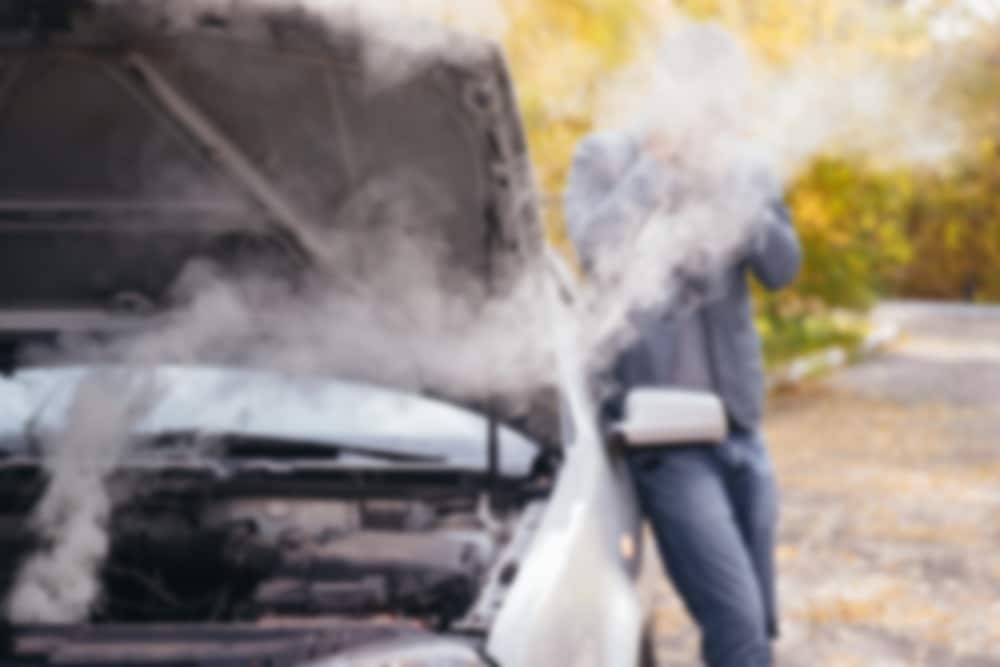
Engine overheating is one of the few mechanical problems where continued driving can result in catastrophic, irreversible damage in a matter of minutes. When the engine temperature climbs beyond its operating range, head gaskets can fail, cylinder heads can warp, and in extreme cases, the engine can seize entirely.
If your temperature gauge climbs toward the red zone, coolant warning light activates, or you detect steam or a sweet smell coming from under the hood, the appropriate response is to pull over safely and stop driving—not to try to make it to the next exit.
The causes of overheating range from low coolant and a failed thermostat to a failing water pump or radiator leak. Many of these are straightforward repairs when caught early. None of them are straightforward repairs after an engine has been run to the point of damage.
What Makes Suspension and Steering Problems a Safety Concern?
Suspension and steering systems are responsible for keeping your vehicle stable, predictable, and controllable—particularly during sudden maneuvers or emergency stops. When these systems degrade, handling suffers in ways that may not be obvious during normal driving but become critical in high-stress situations.
Signs of suspension wear include uneven tire wear, a pulling sensation when driving straight, excessive bouncing after hitting a bump, or a vehicle that feels loose or wandering on the highway. Steering issues often present as vibration in the wheel, stiffness, or a tendency to drift.
Worn shocks, struts, tie rods, ball joints, and steering components all affect how the vehicle responds to driver inputs. A vehicle with compromised suspension takes longer to stop, handles poorly in wet conditions, and is more difficult to control during evasive maneuvers. These aren’t abstract risks—they affect real-world performance in the moments that matter most.
Why Do Check Engine Light Repairs Get Delayed—and Why That’s Risky?
The check engine light is one of the most misunderstood warning indicators on any dashboard. Because it can illuminate for reasons ranging from a loose gas cap to a failing catalytic converter, many drivers assume it’s probably nothing serious and leave it unaddressed indefinitely.
That assumption has a cost. Some of the conditions that trigger a check engine light—oxygen sensor failures, misfires, failing emissions components—can reduce fuel efficiency, increase engine wear, and mask other developing problems. More critically, when the check engine light is already on, additional issues that would normally trigger their own codes become harder to detect.
A professional diagnostic scan at Ken’s Automotive and Transmission identifies exactly what system is involved and what action is appropriate. In many cases, the repair is minor. In some cases, it reveals something that genuinely needs attention. Either way, the information is worth having.
The Long-Term Cost of Waiting
The financial case for timely repairs is straightforward: almost every repair that is delayed becomes more expensive over time. Worn pads damage rotors. Neglected transmission fluid accelerates internal wear. An overheating engine can require a full replacement rather than a simple thermostat swap.
Beyond cost, there’s a safety dimension that doesn’t resolve itself with time. A vehicle that handles unpredictably, stops slowly, or runs unreliably puts the driver, passengers, and others on the road at greater risk with every mile driven.
S&P Global Mobility reported in 2024 that the average age of vehicles on U.S. roads reached 12.6 years—a record high. More drivers than ever are depending on older vehicles to remain safe and functional. For those vehicles, consistent, professional attention to developing repair needs isn’t optional. It’s what keeps them road-worthy.
Take the Next Step Before a Small Problem Becomes a Large One
The repairs outlined here share a common thread: they are all manageable when addressed early and significantly more difficult—and expensive—when they’re not. Brakes, transmissions, cooling systems, suspension components, and engine warning lights all respond to early intervention in ways that protect both your vehicle and your budget.
Ken’s Automotive and Transmission provides comprehensive diagnostics and repair services for drivers who want a trusted, experienced shop in their corner. If your vehicle is showing any of the warning signs described above, don’t wait for the situation to deteriorate further. Schedule a service appointment with Ken’s Automotive and Transmission and get a clear, professional assessment of what your vehicle actually needs.